
01
Amazing performances
Immerse yourself in the exciting performances of acrobats, jugglers and illusionists who will delight you with their skill and talent. Every performance is a real feast for the eyes.



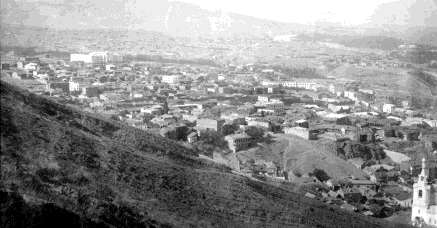
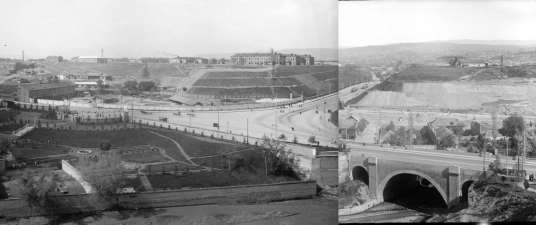
In the mid-19th century, the area of today's Heroes Square was still outside the densely developed part of Tbilisi.
The Georgian Military Road descended through this area, while an old arched brick bridge crossed the Vere River valley.
According to historical sources, the bridge may have dated back to around the 17th century. It was approximately 70 metres long and 5.6 metres wide. The bridge was widened in 1856 and remained in use until 1932.
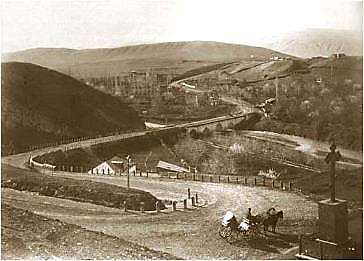
In 1927, Tbilisi Zoo was established on the left bank of the Vere River. At the same time, the area's road infrastructure continued to develop.
During the construction of the road and bridge, an artificial embankment was formed. It was on this elevated site that the Tbilisi Circus building would later be constructed.
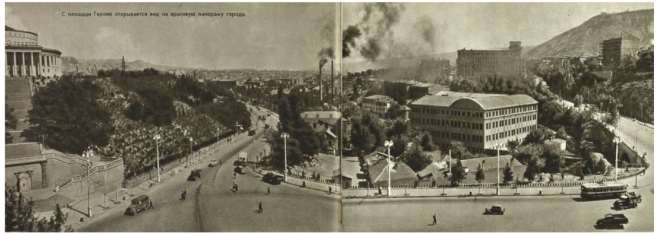
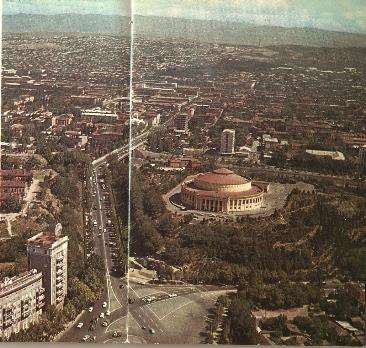
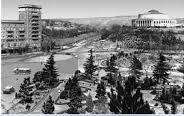
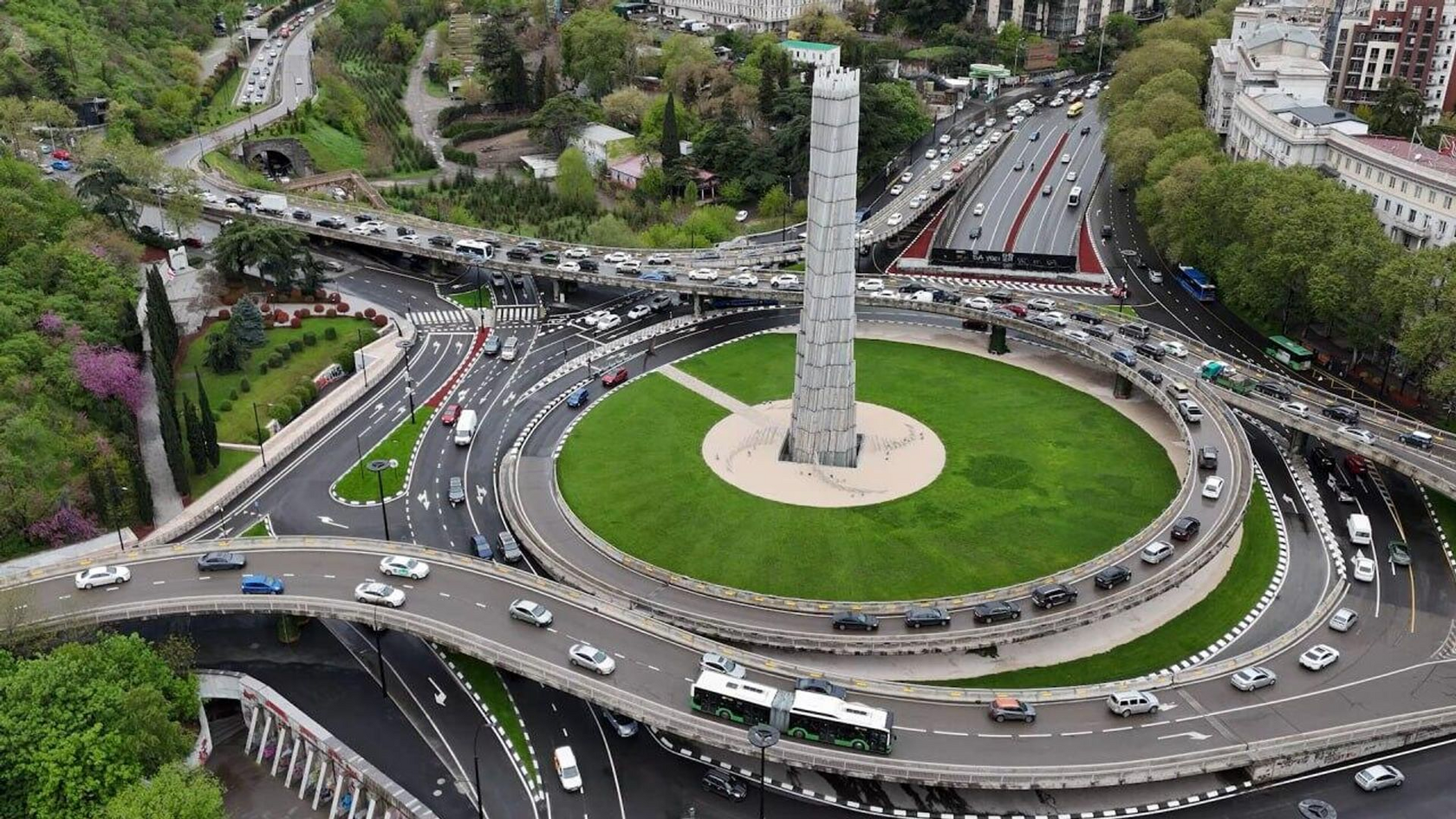
Heroes Square gradually became one of the capital's major transport hubs, connecting routes towards Vake, Saburtalo, the riverfront and the railway station.
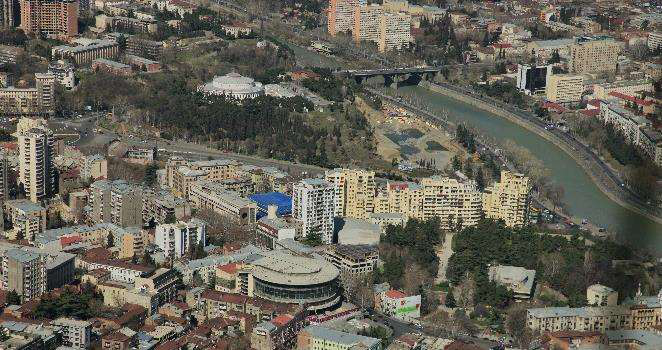
For decades, the circus remained one of the principal visual landmarks of this urban space.
By the end of the 1930s, the square had acquired new architectural landmarks of a much larger scale.
The semicircular form of a nearby residential building created a compositional dialogue with the circular volume of the circus.
Over time, this relationship became less visible as the surrounding urban environment changed and vegetation around the circus grew.
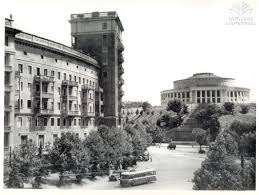
The present building was far from the beginning of Tbilisi's circus history.
In the 1890s, the Nikitin brothers built a circus on Golovinsky Avenue. The building burned down in the early 20th century.
In 1914, Esikovsky built another circus on the site of what later became the wine factory.
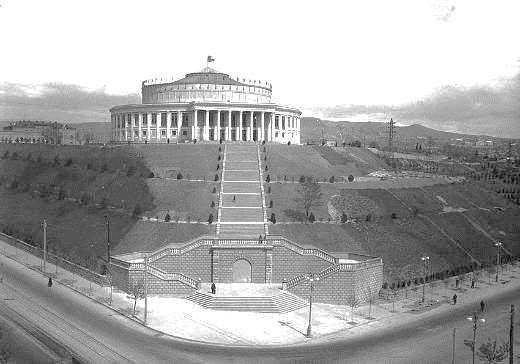
The building is based on a reinforced-concrete frame with brick infill. Metal trusses were used in the roof structure.
The exterior reflects the internal layout: the building is composed of stepped circular volumes.
The main entrance is emphasized by a monumental portico and is connected to the grand staircase of the circus hill.
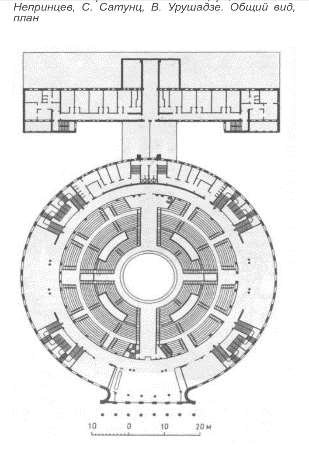
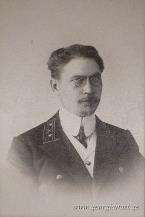
The study identifies M. Neprintsev as the principal architect of the design team behind the Tbilisi Circus building.
He was born in Tbilisi in 1877. After graduating from the St. Petersburg Institute of Engineering and Architecture in 1902, he returned to Tbilisi and began his professional career as an architect.
He later worked for state and design institutions and was also active in architectural education.
Working in Tbilisi, the architect sought to draw on Georgia's rich architectural heritage and to achieve a national — and at times distinctly Tbilisi — architectural expression.
Between 1922 and 1932, Neprintsev employed compositional principles associated with Constructivism. In his later work, historical forms and national architectural heritage became increasingly important.
He sought to reinterpret motifs from Georgia's architectural past in a contemporary form.
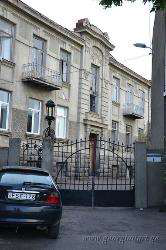
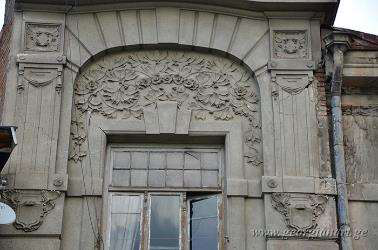
Over approximately five decades of professional
activity, M. Neprintsev developed more than
150 projects for buildings and structures
of various types.
According to the study, around 70% of them
were realized. His work included residential,
administrative and public buildings, railway
stations, schools, institutes, clubs, theatres,
hospitals and bridges.
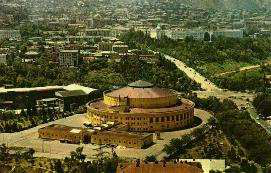
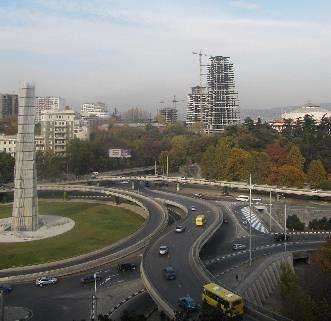
Historically, the circus was clearly visible from distant viewpoints and formed one of the district's principal visual landmarks.
As Tbilisi developed, the character of the surrounding urban environment changed. Nevertheless, the historic circus building retained its significance in the city's panorama.
In the 21st century, the historic building continued to serve its original purpose.
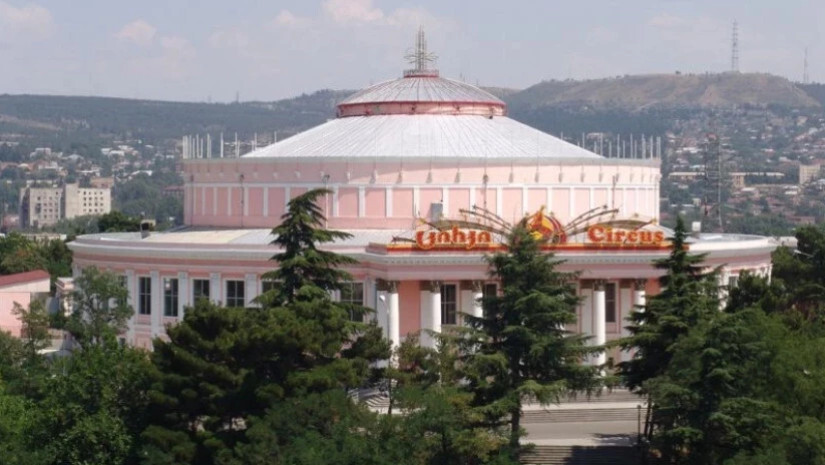
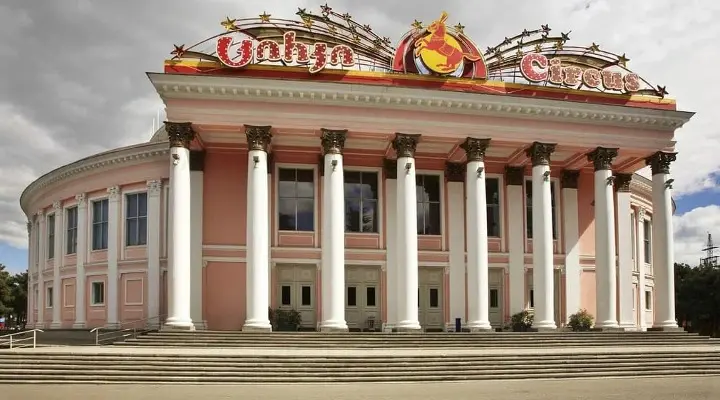
The historical and architectural study emphasizes the significance of the Tbilisi Circus building within Georgia's urban heritage.
Its value lies not only in the building itself, but also in its position within the city, the historic circus hill, the grand staircase and the surviving elements of the original landscaping.
Any future development of the surrounding territory should preserve the traditional views of the circus and its visual relationship with the city.
Immerse yourself in the exciting performances of acrobats, jugglers and illusionists who will delight you with their skill and talent. Every performance is a real feast for the eyes.

The circus is an ideal place to spend time together. It is fun and interesting for everyone, from the youngest visitors to adults. Create unforgettable memories with your loved ones.

The unique atmosphere of the circus makes your heart beat faster. From laughter to delight, experience a full range of emotions that will make your evening special.

Step into the world of the circus and discover its rich history and traditions — an art form that has fascinated audiences around the world for generations.

Your visit supports talented performers and creative teams, helping them continue their work, develop new acts and bring unforgettable performances to the circus arena.
We are always happy to answer your questions and see you at the circus!